Page 22 of 23

Conflict Minerals, Gender and (In)Security in Africa’s Great Lakes Region

Presented by the Institute of African Studies at Carleton University and part of the lunch-time Brownbag lecture series, this talk was delivered by Joanne Lebert of Partnership Africa Canada (PAC).  Fully titled: “Conflict Minerals, Gender and (In)Security in Africa’s Great Lakes Region: the limitations of the sexual violence paradigm,” this talk was hosted on 4 March 2015.

Dubinsky on Fieldston, ‘Raising the World: Child Welfare in the American Century’

suggested by Andrew Johnston (Network member)

Sara Fieldston. Raising the World: Child Welfare in the American Century. Cambridge: Harvard University Press, 2015. . $39.95 (cloth), ISBN 978-0-674-36809-5.

Reviewed by Karen Dubinsky (Queens University)
Published on H-Diplo (September, 2015)
Commissioned by Seth Offenbach

Sara Fieldston’s Raising the World: Child Welfare in the American Century helps to build the case, now made by many scholars, for considering foreign policy from the bottom up, wresting our conceptualization of international relations from the world of men-in-suits and dispersing it, as it should be, through various sectors of the population. It is also an important contribution to the historiography of childhood and child welfare, a component of international relations. These are not well-trod paths but they are not new territory either. Where Raising the World says something very new is in its suggestive, at times impressionistic, discussion of the links between the post-World War Two project of “Third World Development” and childhood.

Continue reading

German Diaspora Aid in the Post-War and its Meaning for Today.

by Sean Eedy

In the current climate surrounding the refugee crisis in Europe, the European Union is struggling not only with the relocation of these refugees, but also with feeding and housing these refugees and who should pay for it all.  At the moment, Germany seems to be the preferred destination of the majority of these refugees and, given the relative economic strength of Germany in Europe and their leading position in EU affairs and institutions, this may perhaps be the most tenable situation.  Germany has a system in place to resettle these refugees across the state in proportion to the ability of each Laend to sustain them, but this will become taxing on even the strongest economy and requires the aid of supranational institutions and NGOs.  This migrant crisis and the accompanying stresses on German infrastructure have since sparked resurgence in Neo-Nazi activity even before the November 2015 attacks in Paris and Beirut.

Continue reading

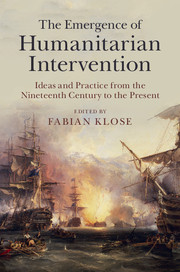
New Publication: The Emergence of Humanitarian Intervention.

Cambridge University Press recently published a new volume on humanitarian aid and intervention of potential interest to the community.  Edited by Dr. Fabian Klose of the Leibniz-Institut fuer Europaeische Geschichte, Mainz, The Emergence of Humanitarian Intervention: Ideas and Practice from the Nineteenth Century to Present presents articles by academics including Michael Geyer, Daniel Marc Segesser, Stefan Kroll, and Mairi S. Macdonald.

Continue reading

Loescher, Historian of Refugees, Meets with Graduate Students

by William Tait

(First published by Carleton University FASS blog)

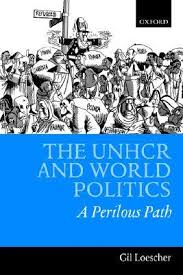
On September 23-25, Migration and Diaspora Studies held the three-day workshop “Power and Influence in the Global Refugee Regime” organized by Dr. James Milner from Carleton’s Department of Political Science. The event brought together scholars and practitioners from academia, NGOs and government to discuss how refugee policy is influenced and implemented by a broad range of actors, from grassroots activists to transnational governments. One of the presenters was Dr. Gil Loescher from the Refugee Studies Centre at Oxford University. Gil kindly agreed to hold a separate master class for graduate students before the main workshop took place. The master class, hosted by Dr. Milner and Dr. Dominique Marshall from the Department of History had been organized around a discussion of Gil’s 2001 book, The UNHCR and World Politics: A Perilous Path, a definitive political history of the first five decades of the Office of the United Nations High Commissioner for Refugees. The class however, developed into something much more than a discussion of this book.

Continue reading

Ideas: “From the Trenches – Just Trying to Help,“ CBC Radio, 15 September 2015

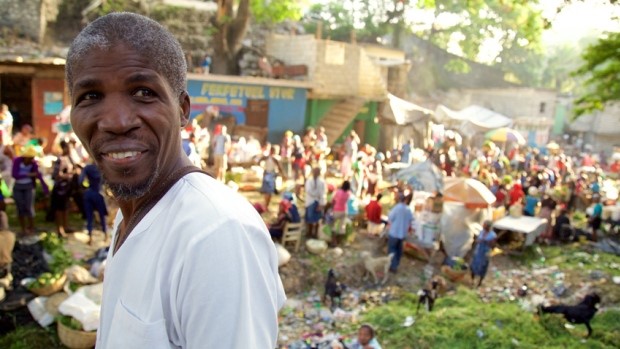
“The borderlands that separate genuine helpfulness from meddling—or worse—are an unruly region in the realm of thought…riddled with questions of consent and of who-knows-best. This episode is called Just Trying to Help and it takes us to a small, densely populated island in the Caribbean, where wealthy foreigners have been ‘just trying to help’ for decades: the troubled nation of Haiti.

It is the latest in our series Ideas from the Trenches where producers Tom Howell and Nicola Luksic showcase the work of PhD students across the country. Marylynn Steckley is a PhD graduate from Western University. She spent 6 years in Haiti with her family both as an NGO worker and researcher.” 55 minutes. SSHRC Storyteller winner.”

You can listen on the CBC website here.


[post suggested by Nassisse Solomon]

Virtual Visit to the Offices of the Canadian Hunger Foundation on the Eve of its Closing, August 2015

Carleton PhD candidate Will Tait visited the CHF building just before it closed. Click here for slide show:

House of the Canadian Hunger Foundation, Chapel street, Ottawa

And here is the post announcing the closing.  Here is an article in Embassy on the forces that lead to the closing: “Anatomy if an NGO closure“.

Library and Archives Canada hold the CHF fonds.  Here is the Description of the fonds. They will collect the remaining archives.  The CNHH is working with them on a project to rescue and identify a large collection of unidentified pictures.

The Freedom from Hunger Project commemorates some of their history.

And Matthew Bunch, member of the network and historian, wrote his doctoral thesis on the topic:  “All Roads Lead to Rome: Canada, the Freedom From Hunger Campaign, and the Rise of NGOs, 1960-1980“, University of Waterloo, 2007.  He has posted “A Short History of the Canadian Hunger Foundation” on this website.

My Visit to Plan Canada’s Head Offices in Toronto

By Carlos Uriel Contreras Flores


Hello,

In this post I will let you know my experience in Toronto at the offices of Plan Canada, a visit I made last week.

Some weeks ago, Professor Dominique Marshall asked me to check some irreplaceable documents that Plan Canada had in their offices in Toronto, and that are part of the historical archives of the organization. These are basically letters and photo albums of some of their most important and lasting donors and sponsors.

Continue reading

Second Canadian Workshop on the History of Humanitarian Aid

By William Tait

The Second Canadian Workshop on the History of Humanitarian Aid took place on 30 May 2015 at Carleton University in Ottawa.  The event built on a workshop held last year where historians  from across Canada, archivists from Library and Archives Canada and Carleton University Archives, a well as humanitarian practitioners from Partnership Africa Canada, Oxfam, and MATCH International Women’s Fund met to welcome Dr Kevin O’Sullivan from the National University of Ireland.  Kevin was a catalyst for the first workshop in 2014 when he travelled to Canada to conduct research.  In his latest book O’Sullivan has likened Irish and Canadian use of soft power through aid and development1.  Under the organisation of Dominique Marshall, Professor and Chair of the Department of History at Carleton and former President of the Canadian Historical Association, a website was created after the 2014 meeting to link a growing online collaboration of aid practitioners, archivists, and academics interested in preserving the history of humanitarian action both in Canada and elsewhere.  O’Sullivan returned to Carleton this year to brief the workshop and members of the Canadian Network on Humanitarian History (CNHH) on developments in the field and to continue to expand collaboration with European partners.

Continue reading

« Older posts Newer posts »