
Page 12 of 24


McGill University, 7-8 March 2019
Patti Tamara Lenard (University of Ottawa) and Laura Madakoro (McGill University)
In recent decades, there has been a great deal of attention given to modern sanctuary practices,
ranging from the sanctuary offered to asylum seekers from Central America in the 1980s to recent
efforts to declare university campuses, cities and states sanctuary spaces. Although much of the
focus has been on contemporary activities in the United States, sanctuary is a global, and deeply
historic phenomenon. Continue reading
This post is cross-posted in partnership with ActiveHistory.ca
by Jill Campbell-Miller, PhD and Ryan Kirkby, PhD, MLIS
In general, historiography and historical methods courses do a good job in teaching students to be skeptical of their sources. As undergraduate and graduate students, we learn to scrutinize what we read, hear, or see. Yet while historians may be familiar with how to critique the sources themselves, rarely do we look up from a given document and examine the place where it is located, or think about how the document arrived in the archives. This is particularly true of written documents that emerge from government. Historians do not always critically engage with the organizational structure of the files, or think about how a certain structure came into being. This might seem somewhat “inside baseball” to historians, who usually leave such concerns in the hands of archivists. Exploring organizational descriptions on archival websites is not for the faint of heart, and rarely make much sense to the untrained observer. But considering these issues is important, because the history of how government departments change over time influences how documents come to be organized, influencing the history that emerges from this research. Continue reading

In October 2018, the Oral History Association will be gathering in Montreal for their annual conference. CNHH member, Dr. Isabel Campbell, will be presenting a paper. In addition, Dr. Campbell introduced the Network to the associated oral history and multimedia project presented in association with the OHA and Oral History at Concordia University. Any member interested should visit the OHA website for information on their annual conference (October 2018 @ Concordia University, Montreal QC) or the Centre for Oral History and Digital Storytelling at Concordia University for information on the multimedia project. Likewise, the CNHH Event posting may be found here.
The program for this exhibition of the COHDS Research Centre at Concordia may be found here.
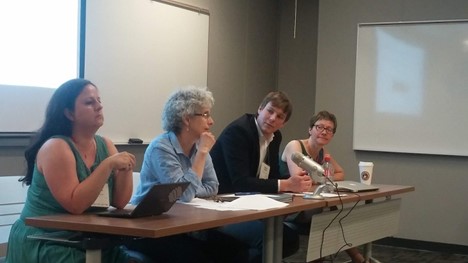
The Canadian Network on Humanitarian History sponsored a panel at the Canadian Historical Association in Regina on May 29th, 2018 on “Histories of Humanitarianism and (Visual) Media.” Four presentations explored the complicated ways in which media, particularly visual media, challenged, described, and elicited humanitarian interventions in the 20th century. On the whole, the panel asked the audience to think about the important role that media has played in histories of humanitarianism globally, and the complexities inherent in the use of media as a tool in humanitarian contexts.
Histories of Humanitarianism and (Visual) Media | Histoires de l’humanitaire et les médias (visuels)
Panel introduction by Chair, Stephanie Bangarth (Western University), 0:09
Sonya de Laat (McMaster University): “Visual Displacement of
Refugees: Lewis Hine’s First World War Photographs for the American
Red Cross, 1918-1919,” 3:08
Valérie Gorin (University of Geneva): “Humanitarian Cinema and
Visual Advocacy in the 1920s: When Seeing was Believing,” 14:50
Soenke Kundel (Free University of Berlin/Germany): “Global Media and
the New Humanitarianism in the Context of the Vietnam War,” 29:40
Dominique Marshall (Carleton University) “ ‘CIDA Brings you
the World! ‘Children’s Reception of Humanitarian Photographs
of Children: 1980-2000,” 40:35
Panel Chair Stephanie Bangarth poses prepared questions to the panel, 54:15
The panel is opened to questions from the audience, 1:16:40. Be advised that these questions may be difficult to hear given the audience’s position to the microphone. You may be required to increase the audio’s volume to hear this portion.
Sponsored by the Canadian Network on Humanitarian History
| Parrainée par le Réseau canadien sur l’histoire de
l’humanitaire

by Daniel Manulak and Jean-Michel Turcotte
The Canadian Network on Humanitarian History (CNHH) convened its fifth annual workshop during the 2018 Congress of the Humanities and Social Sciences, hosted by the University of Regina. In attendance were Dominique Marshall, Jill Campbell-Miller, Sonya de Laat, Valérie Gorin, Daniel Manulak, Kiera Mitchell (Technical Assistant), Cyrus Sundar Singh, Yordanos Tesfamariam, Jean-Michel Turcotte, and David Webster. Joining the meeting by Skype were Katie-Marie McNeill, Chris Trainor, and Anne-Emmanuelle Birn.

Call for Papers
Culture & International History VI: Visions of Humanity
6-8 May 2019 in Berlin
John F. Kennedy Institute, Freie Universitaet Berlin
Deadline: July 8, 2018
The conference Culture and International History VI will take place from 6 – 8 May 2019 in Berlin. The conference marks the 20th anniversary of the symposium cycle that began in 1999 and has since taken place in Wittenberg, Frankfurt, Cologne, and Berlin; key themes and contributions have been published in Berghahn Books’ series Explorations in Culture and International History (Oxford, New York, since 2003). Continue reading
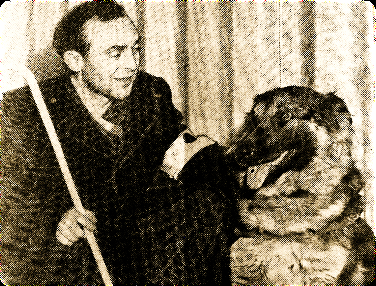
White cane in hand, Karol Gamrot arrived with his family and guide dog Utta at
the Montreal Airport on January 18, 1951. He was one of eight blind refugees and
their families sponsored to come to Canada from camps across Europe in the early
1950s. Learn more about Gamrot’s story in an exhibit that explores the historic
challenges of migrants and new Canadians with disabilities, as well as the mixed role
of technology in their lives. Continue reading
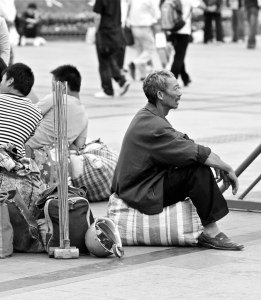
In their effort to preserve the legacy of Canada’s immigration history and to support continued excellence in research in Canada on international migration, the International Migration Research Centre (IMRC) and the Canadian Immigration Historical Society (CIHS) are jointly offering a $1000 award for a fourth-year or graduate-level reseIMG_1813arch paper on the historical evolution of Canadian immigration policy or a historical analysis of Canadian immigration related to specific places, events, or communities. Continue reading
Description
The Journal of Humanitarian Affairs is an exciting, new open access journal hosted jointly by The Humanitarian Affairs Team at Save the Children UK, and Centre de Réflexion sur l’Action et les Savoirs Humanitaires MSF (Paris) and the Humanitarian and Conflict Response Institute at the University of Manchester. It will contribute to current thinking around humanitarian governance, policy and practice with academic rigour and political courage. The journal will challenge contributors and readers to think critically about humanitarian issues that are often approached from reductionist assumptions about what experience and evidence mean. It will cover contemporary, historical, methodological and applied subject matters and will bring together studies, debates and literature reviews. The journal will engage with these through diverse online content, including peer reviewed articles, expert interviews, policy analyses, literature reviews and ‘spotlight’ features. Continue reading