
Page 11 of 23

Tenure Stream Assistant Professor of International Development Studies – York University

From York University’s Academic Employment Opportunities page.


Position Rank: Full Time Tenure Stream – Assistant Professor
Discipline/Field: International Developments Studies
Home Faculty: Liberal Arts & Professional Studies
Home Department/Area/Division: Social Science
Affiliation/Union: YUFA
Position Start Date: July 1, 2019


The Department of Social Science, Faculty of Liberal Arts & Professional Studies, York University, invites applications for a tenure-stream professorial-stream position in International Development Studies at the rank of Assistant Professor to commence July 1, 2019. More information about the Department can be found at http://sosc.laps.yorku.ca/; information about the International Development Studies Program can be found at http://idst.sosc.laps.yorku.ca/; information about the MA program in Development Studies can be found at http://dvst.gradstudies.yorku.ca. Continue reading

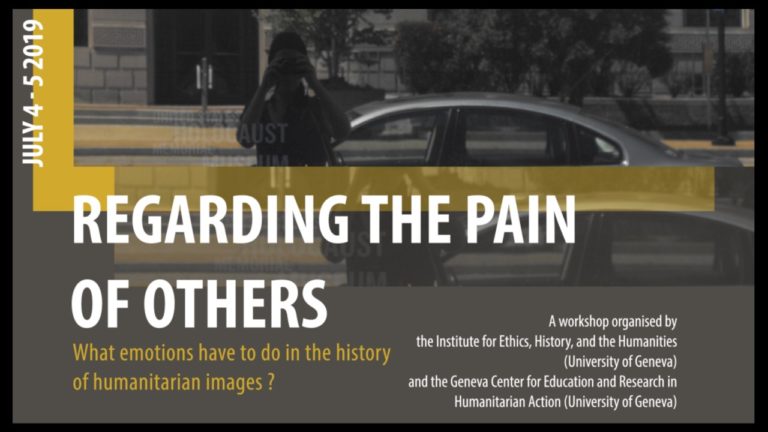
CfP: Regarding the Pain of Others

Originally posted to BMJ Blogs, by Bryan Mukandi.

Regarding the Pain of Others:

What emotions have to do in the History of Humanitarian Images?

(Geneva 4-5, 2019)


Taking the title of Susan Sontag’s seminal work as a starting point, this workshop aims at re-opening an old debate about the potentialities of exhibiting other’s suffering in order to promote a culture of peace, prevent war and/or resolve conflict. Sontag concluded in her book that images of atrocities had led the Global North to a form of exhaustion, also called compassion fatigue, which has been criticised more recently as a myth. Yet, images remain today the main strategy of humanitarian organisations to raise awareness and funds. Continue reading

CfP: Human Rights and Transnational Legal Activism: Limits and Potential

by Deniz Yonucu

reposted from H-Announce. The byline reflects the original authorship.


Human Rights Work and Transnational Legal Activism: Limits and Potential
February 8 and 9, 2019

International human rights laws and bodies have been one of the key sites of the struggle against state crimes and human rights abuses in the post-World War II era. Yet, the discrepancy between the promises of international human rights laws and what they actually do has not gone unquestioned. While in some contexts numerous international treaties, conventions and regulations have served as a means of pressuring governments to improve human rights, in certain other contexts international human rights laws and movements have become a part of the problem. The constituents of international human rights movements have frequently been criticized for being complicit with neoliberal and neocolonial projects and policies. Continue reading

CfP: Official Development Assistance at the CHA, Vancouver 2019

Call for Papers for the CNHH sessions at the 2019 CHA Congress.

Deadline to submit: October 1.  


The CNHH sponsored sessions at the Annual Meeting of the Canadian Historical Association in Vancouver in 2019 will be on Official Development Assistance,  especially questions of training and education in the aid field, universities and internationalization, other aspects of settler colonialism and humanitarianism, Canada and international aid organizations, etc.


It is coordinated by David Meren, who is preparing a paper on “‘Development’: Settler Colonialism and the Origins, Life and Demise of the United Nations Regional Training Centre for Technical Assistance at UBC”.


Please write to him before October 1 <david.meren@umontreal.ca> if you are interested.

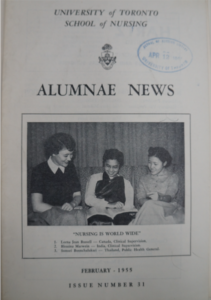
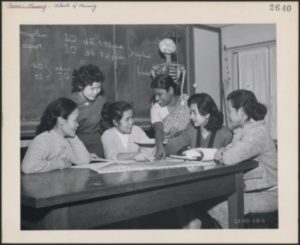
Armenian Refugees & the United Church of Canada

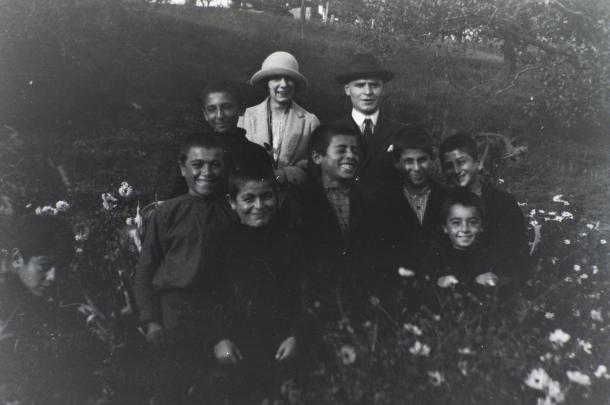
Envisioning Gratitude: Armenian Orphans in Canada

by Sandrine Murray


The Armenian Genocide was the result of the Ottoman government’s destruction of 1.5 million Armenians, most of them citizens within the empire. This was during and after the First World War. Most academics place the beginning of the genocide in 1915, though there are various accounts of violence against the Christian minority in the Ottoman empire before then. The Armenian Genocide is often seen as the first modern genocide, though to this day the term has been rejected by Turkey to describe what happened. Continue reading

Call for Papers: The Stakes of Sanctuary

McGill University, 7-8 March 2019

Patti Tamara Lenard (University of Ottawa) and Laura Madakoro (McGill University)


In recent decades, there has been a great deal of attention given to modern sanctuary practices,
ranging from the sanctuary offered to asylum seekers from Central America in the 1980s to recent
efforts to declare university campuses, cities and states sanctuary spaces. Although much of the
focus has been on contemporary activities in the United States, sanctuary is a global, and deeply
historic phenomenon. Continue reading

Historian, Meet Archivist: Researching the History of Complex Organizations

This post is cross-posted in partnership with ActiveHistory.ca

by Jill Campbell-Miller, PhD and Ryan Kirkby, PhD, MLIS


In general, historiography and historical methods courses do a good job in teaching students to be skeptical of their sources. As undergraduate and graduate students, we learn to scrutinize what we read, hear, or see. Yet while historians may be familiar with how to critique the sources themselves, rarely do we look up from a given document and examine the place where it is located, or think about how the document arrived in the archives. This is particularly true of written documents that emerge from government. Historians do not always critically engage with the organizational structure of the files, or think about how a certain structure came into being. This might seem somewhat “inside baseball” to historians, who usually leave such concerns in the hands of archivists. Exploring organizational descriptions on archival websites is not for the faint of heart, and rarely make much sense to the untrained observer. But considering these issues is important, because the history of how government departments change over time influences how documents come to be organized, influencing the history that emerges from this research. Continue reading

« Older posts Newer posts »