The second Bulletin of the Canadian Network on Humanitarian History was sent out last week. For any who missed it, the full text of the newsletter may be found below. This bulletin covers the upcoming Congress and Workshop in Calgary, some recent blogs, and the Network’s research activities and work with NGOs.
Author: Sean Eedy (Page 19 of 20)
by Nassisse Solomon
Ethiopia has recently resurfaced in international headlines, in light of yet another looming apocalyptic scale famine. It is being widely reported that Ethiopia is facing its worst drought in 50 years. [1] A result of three failed rainy seasons, coupled with an El Nino effect warming the Pacific Ocean and affecting global weather patterns.[2] Changes in weather patterns that have resulted in punishing heat waves and drought throughout the horn of Africa region, and in Ethiopia becoming one of the worst afflicted countries.[3] With just weeks remaining before the start of the main cropping season in the country, the United Nations Food and Agriculture Organization (FAO) is calling for urgent funding to assist farmers in sowing their fields to abate drought stricken areas from falling deeper into hunger and food insecurity.[4] With a future saddled by the “uncertainty of what nature has called down upon it”[5], Ethiopia, as CBC’s Margaret Evans among many others have characterized it, is once again “on the edge.”[6] Continue reading
by Christine Chisholm and Will Tait
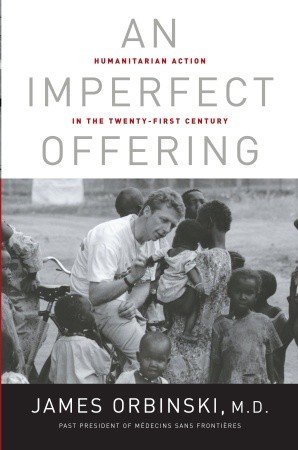
On March 24, 2016 Dr. James Orbinski, former international president of Médecins Sans Frontières, scholar of global health and practicing physician was invited by Carleton University’s Bachelor of Global and International Studies (BGInS) to present the keynote lecture for the official launch of the program. Dr. Chris Brown, director of BGInS, kindly arranged for a meeting with Orbinski before the lecture with CNHH members Dr. Dominique Marshall and PhD candidates Christine Chisholm and Will Tait from Carleton’s Department of History.
With conference season looming, this is just a gentle reminder that registration is open for the Third Workshop on the History of Humanitarian Aid. Please join us for what promises to be a productive and informative meeting of some of the brightest minds in our field. There is no fee to attend and participate, though registration of your attendance is required.
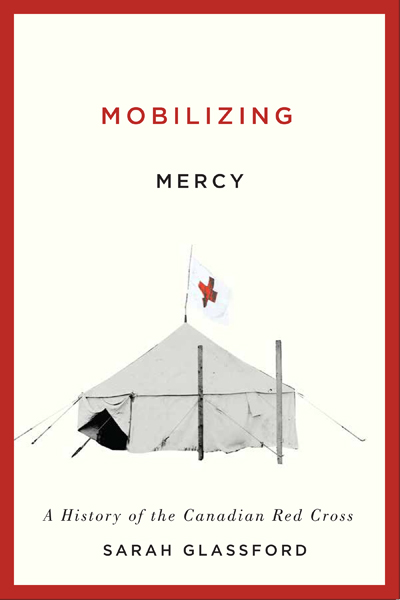
by Sarah Glassford
Before taking this course I thought that humanitarianism was just
a nice way of asking for money. You donate and someone tries
to solve a problem. But through the readings and the emergency
relief assignment/exercise it has become clear that the job is less
straightforward than that. – Haley K.
Those of us who research and write in the area of humanitarian history are well aware of the complexities of aid, both on the giving and receiving ends of the equation. But when we have a chance to teach that history, what preconceptions do our students bring to the classroom, and what do they take away with them at the end of the course? Continue reading
The 4th bi-annual conference of the International Humanitarian Studies Association (IHSA) was held this past 5-8 March 2016. The topic of this year’s conference was Changing Crises and the Quest for Adequate Solutions and was held in Addis Ababa, Ethiopia. While the Call for Papers for the Association’s 2018 conference is still a ways off, information on this year’s conference may be found at the conference website, including links to the organized panels and papers. Although the conference is still recent, it appears that individual papers may be uploaded at some point in the future.
Under the ‘Resources’ area of the site, we now have a space dedicated to Journals about the history of humanitarianism and humanitarian aid. The first journal added is Humanitarian Alternatives. Please visit their site and read the first issue of this new journal through our Journals page or via the Humanitarian Alternatives website directly.
If you know of other journals appropriate to the CNHH, please tell us know through the Contact Us page.
by Jill Campbell-Miller
posted jointly with Active History.
In the area of development finance Canada has lagged behind its international partners in the G7, only promising to establish a development finance institution (DFI) in the 2015 budget, some 67 years after the UK established the first DFI. This might come as surprise, since blending the interests of domestic Canadian businesses and official development assistance (ODA) has been an objective of the Canadian government since the early days of aid-giving in the 1950s, to the delight of some, and the dismay of others.
Recently, an article published on the University of Waterloo’s website recognized the achievements of CNHH member and professor at St. Mary’s University in Halifax, Dr. Jill Campbell-Miller. Her dissertation, “The Mind of Modernity: Canadian Bilateral Foreign Assistance to India, 1950-60,” was selected as a finalist for the Council of Graduate Studies/ProQuest Distinguished Dissertation Award. Visit the University of Waterloo website for the complete article including comments about her dissertation and experience from Dr. Campbell-Miller and her supervisor, Dr. Bruce Muirhead.
The Canadian Network on Humanitarian History proudly announced the lauch of the Network’s new website with the release of its first newsletter to its membership. See the complete newsletter with recent posts, announcements and the activities of the Network below.